
Engagement Ring Guide: How to Find the Perfect Shape, Setting & Style

Engagement rings are an important purchase, a life affirming goal, and most certainly a serious step on the adulthood ladder.
This is why then, it’s so important to find the right ring for the right person. Whether your going for a gold ring, deciding on silver or plumping for platinum, read on below for our handy guide on choosing the perfect ring for your partner.
First Things First…
Before you jump straight in, we suggest starting with three important preliminary check points – budget, quality and reputation.
- Budget
It may seem obvious, but deciding on a clear and realistic budget should always be your first port of call. Don’t forget, you’ve also got the small matter of a wedding ring and the big day to pay for – plus honeymoon expenses!
- Quality
Taking your aforementioned budget into account, it always pays dividends to purchase the highest-quality stone possible within your price range.
Whether you’re picking from branded diamonds or coloured gemstones – aim for the top! Not only will this keep your significant other smiling, it’ll also stand the test of time. - Reputation
Often overlooked, but always important – find yourself a reputable jeweller! From big high street names to independent retailers, make sure that your chosen jeweller has a positive history of clientele.
It may also pay off to check their return policy, should the jewellery be the wrong size, you don’t want to have spent your hard-earned cash on a ring your can’t return!
Choose Your Metal…
Once you’ve considered your budget and the rest of the above, it’s time to find their ring size and pick the precious metal that will make up the ring.
What you get here ultimately depends on how much you’re willing to spend, so let us walk you through the five most popular metal types:
Yellow Gold: The classic choice for engagement rings, you’ll all be familiar with yellow gold. It’s important to complement his or her current style of jewellery, so picking this option if they’re already a fan of yellow gold should go without saying!
White Gold: Increasingly popular due to its ability to blend well with other jewellery styles, white gold offers a smoother, contemporary and modern look.
14K Gold: Comprising of 58.3% gold and 41.7% alloy metals, this is a popular choice of metal for those on a limited budget. Though traditionally bought in yellow gold, this choice is also available in white gold.
18K Gold: Consisting of 75% gold and 25% alloy metals, experts consider this choice the ideal balance of precious metal purity and strength. This style is also available in both yellow and white gold.
Platinum: The most precious (and rare) of metals, platinum is 95% pure as well as harder and more durable than gold. Platinum will also retain its white colouring permanently, making this the most expensive of metal choices.
The Three S’s…
Now we’ve covered the basics and picked your precious metal, it’s time to explore the characteristics that make each ring individual, and ultimately special, to the wearer.
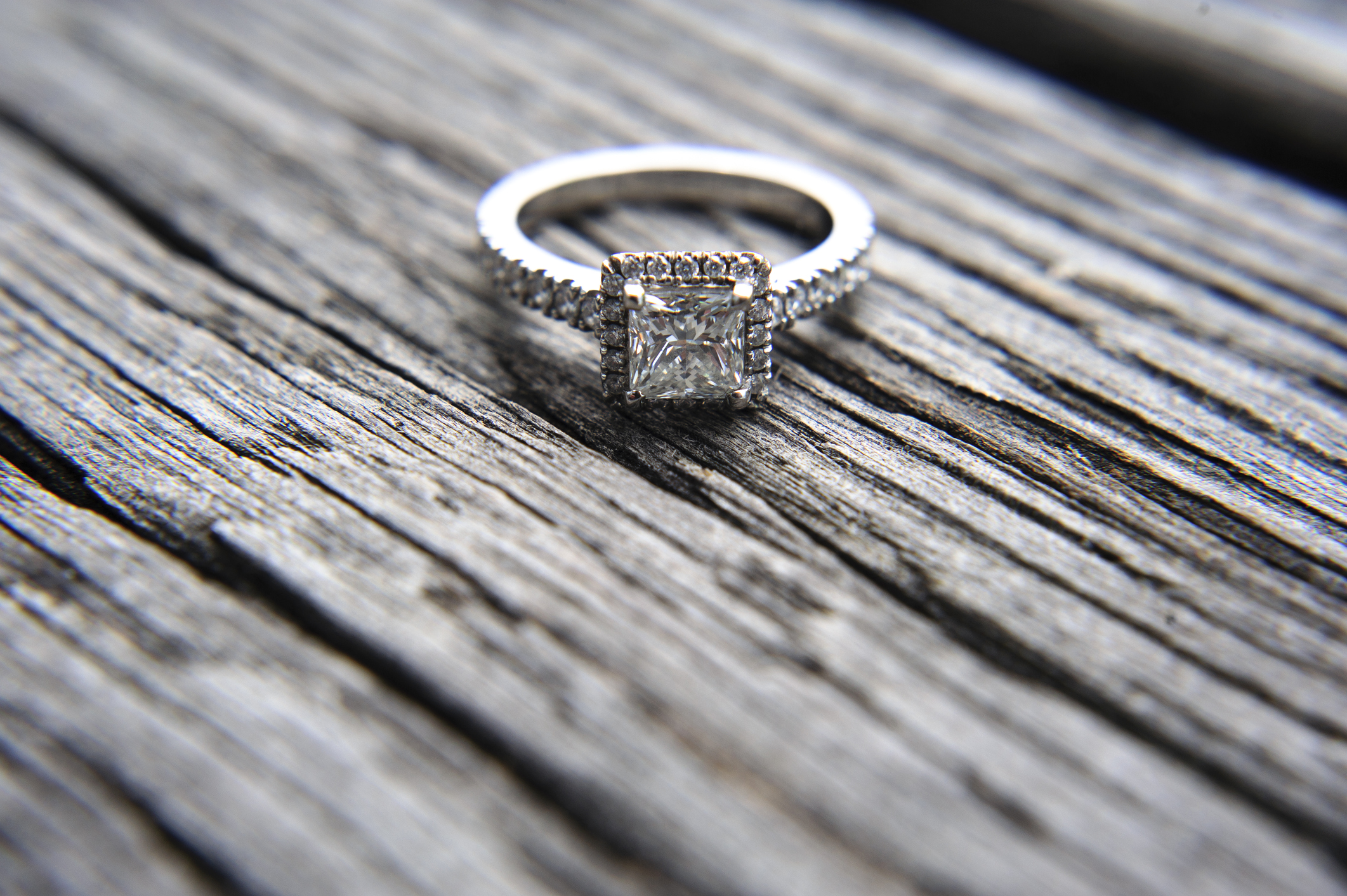
To help find ‘The One’, we recommend following our ‘Three S’s’…
Shape, setting and style.
- Shape
Anything other than a simple band means that you’re going to have to think about stones. Of course, the most popular choice here is a diamond (or diamonds!).
Diamonds are valued by size, so when picking your shape, it’s important to consider the ‘Four C’s’ (yes, we love an alliterated checklist!):
Colour, clarity, carat weight and cut.
There are nine basic diamond cuts available to pick from here; oval, marquise, round, cushion, princess, pear, asscher, emerald and radiant.
- Setting
Once you’ve selected the shape, you’re going to have to think about how the precious stone is going to be presented.
The setting holds the centre stone in place, plus any additional stones; it’s integral to the ring’s design, therefore it’s important that you get it right!
There are four basic settings to pick from:
Prong: The stone is suspended with small wires, this makes the stone visible from all sides.
Bezel: A frame constructed from the same precious metal as the ring’s band, keeping the stone extremely secure.
Cathedral: This setting is comprised of rising slopes that protect the sides of your stone.
Tension: Held in place by pressure, this setting gives the illusion that the stone is hovering.
- Style
The style will finish the overall look of the ring; what you pick here is likely to depend on your style of stone, as the overall style is designed to accentuate the centrepiece of the ring.
There are three main styles to choose from:
Solitaire: This style features a single diamond or stone. Widely recognised as the most popular style of ring, this setting usually has a solid, plain band with no additional stones. However, you can request the solitaire style with a band of pave diamonds – as you can with all styles.
Centre diamond with accent stones: Ordinarily, this style comprises of a centre diamond with accent stones (or side stones) that are generally a different shape and a lower carat to the main stone in the ring’s centrepiece.
Three Stone: A traditional setting of a centre diamond and two smaller side diamonds. A variation of styles can feature here, such as identical diamonds on either side of the centre stone, coloured gems or varying the shape of the central diamond.
You’re now all set to get searching for your special ring.
If you found our guide helpful – or need anything further advice – please get in touch with us over on Facebook, Instagram and Twitter.
Good luck popping the question!
Comments are closed here.